
A sensor that starts lifting after exercise and a patch that hurts to remove create different problems. Buying a stronger adhesive may help with one and make the other harder to manage. For someone wearing an insulin pump, carrying the device comfortably can be a separate concern again.
CGM and insulin pump accessories support device attachment, skin protection, adhesive removal and everyday carrying. They include overpatches, skin barrier wipes, adhesive removers and, for suitable pump systems, belts, pouches or clips. The right choice depends on the device and the problem being addressed; using every category is not a requirement.
This guide separates those jobs so that wearers, distributors and product teams can discuss what is actually needed. It covers two groups: accessories for continuous glucose monitoring (CGM) and accessories for insulin pumps. Shared skin-care products appear in both, but they do not replace the device manufacturer’s instructions.
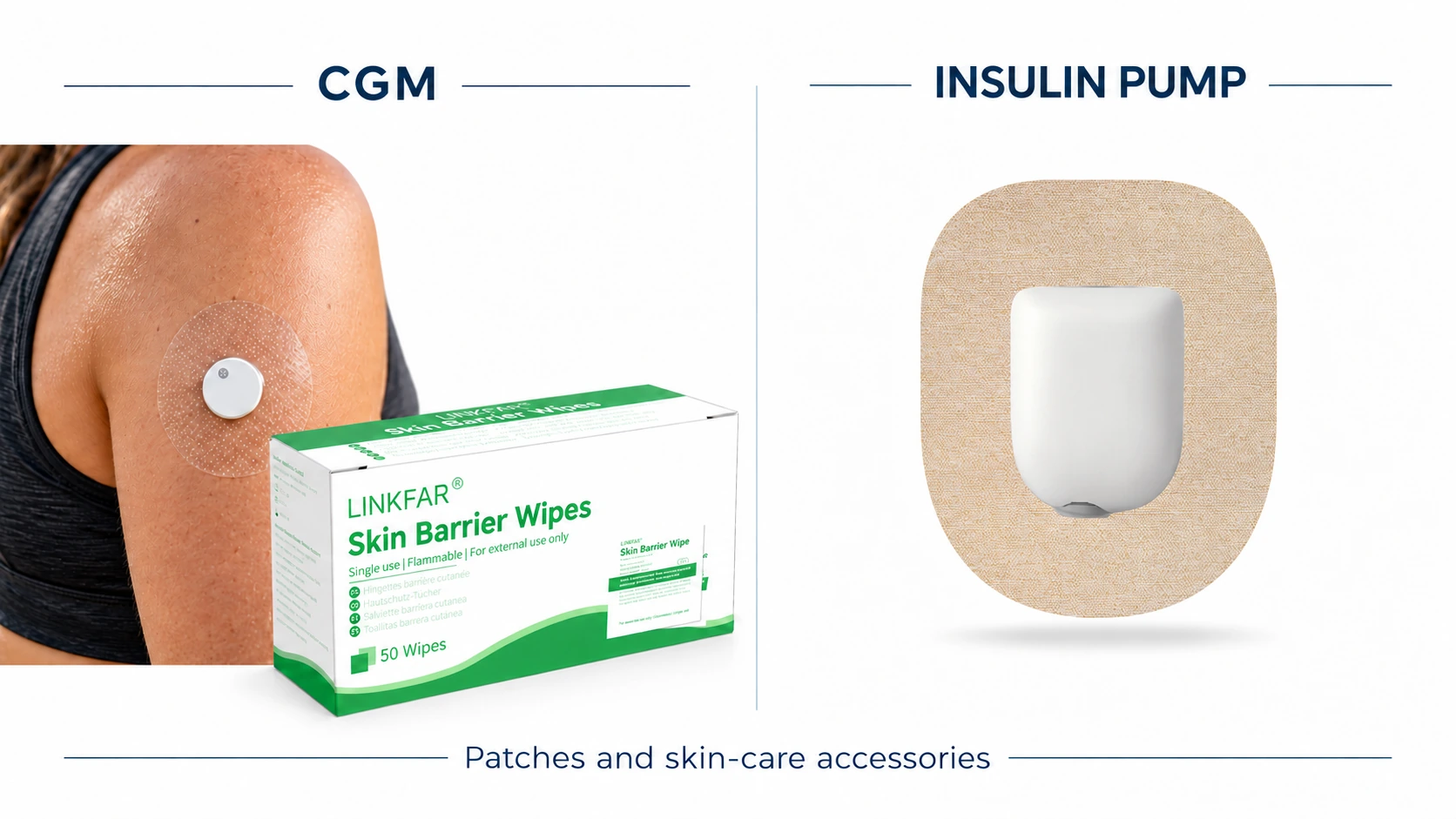
Cover image: editorial composition using LINKFAR product artwork and an AI-generated wearing illustration. Products are shown at different display scales. The image does not demonstrate device compatibility or tested performance.
In this guide:
- CGM accessories
- Insulin pump accessories
- Four products that are often confused
- Choosing by the problem
- A distributor’s selection checklist
- LINKFAR products and enquiries

What accessories are used with a CGM?
CGM overpatches: additional fixation
A CGM overpatch is an adhesive patch placed over or around the sensor’s existing adhesive area, according to the design. Its purpose is extra fixation. Shapes with a central opening and designs that cover part of the device are not automatically interchangeable.
Start with the exact sensor generation, not just the brand name. Check the opening, overall dimensions and the parts that must remain unobstructed. Any overpatch supplied or required by the device manufacturer remains part of that device’s instructions; a generic accessory is not automatically an equivalent substitute.
Fabric patches and transparent polyurethane (PU) films offer different constructions. A useful comparison asks how the finished patch handles movement, moisture, removal and skin contact. Material names alone cannot establish how long a patch will stay on.
Our guide to CGM patch materials, adhesives and quality explains how the backing, adhesive and finished construction work together. For a closer look at transparent film, read about the P2/P3 breathable PU overpatch design.
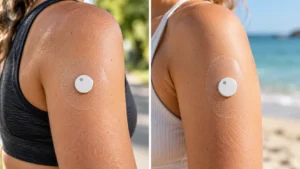
For transparent designs, a discreet appearance is easy to show in a photograph. Breathability and water resistance need separate evidence. The questions for a supplier are what was tested, under which conditions, and whether the result applies to the adhesive-coated finished patch rather than only to a sheet of raw film.
Skin barrier wipes: a protective interface
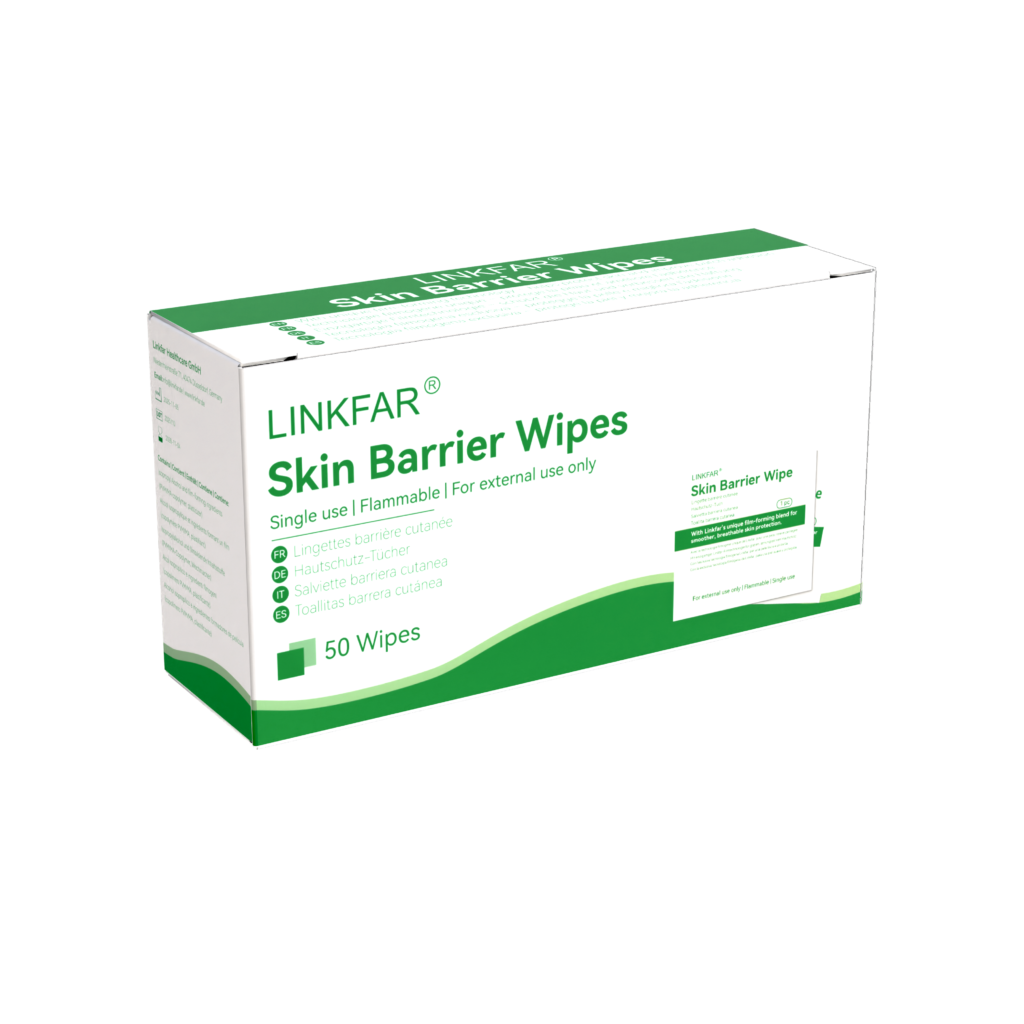
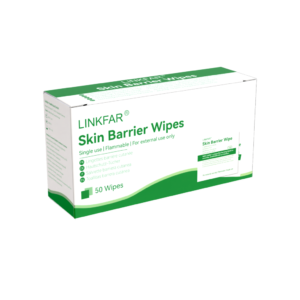
A skin barrier wipe deposits a liquid that dries into a film. That film is intended to provide a protective interface at the skin surface. It is different from an alcohol cleaning wipe and from an adhesive remover.
For example, the Cavilon No Sting Barrier Film product guide describes a film-forming interface between skin and adhesive products. Its formulation, indications and performance belong to that specific product; they cannot be assumed for every barrier wipe.
A barrier film also changes the surface to which an adhesive attaches. Its effect on hold depends on the formulation and the combination of products. Do not assume that “skin barrier” always means “extra adhesive,” or that a protective layer guarantees freedom from allergy.
A real football-related complaint illustrates this trade-off in CGM skin barrier wipes: balancing protection and hold.
Adhesive removers: support when taking a patch off
Adhesive removers are used to help release adhesive products or remove residual glue. Sprays and wipes are available in this category. They are worth considering when the difficulty occurs during removal, rather than while the device is being worn.
Smith+Nephew’s REMOVE product information illustrates this distinction: its stated purpose is removing certain adhesives and their residue. Removers have their own directions, age restrictions and precautions, so a product suitable for one user or application should not be treated as suitable for all.
Choose a medical adhesive remover appropriate to the application and follow both its label and the device instructions. A remover is not a preparation product for increasing adhesion, and it should not be presented as one.
Other CGM accessories to recognise
Underpatches, sometimes called barrier patches, are separate physical layers placed beneath the device’s original adhesive. They differ from liquid barrier films. Their geometry and the insertion pathway need specific review; this guide is not an instruction to insert a sensor through another material.
Cleaning products and adhesive enhancers are two further categories. Cleaning prepares the site as directed by the device manufacturer; an adhesive enhancer is intended to improve adhesion. Some products have more than one labelled function, but that needs to be checked rather than inferred from the word “wipe.”
There are also device-specific armbands and protective covers. Treat these as fit-dependent accessories, not generic substitutes for correct sensor attachment. Size, pressure, access and the device’s operating requirements all belong in the selection discussion.
What accessories are used with an insulin pump?
An insulin pump accessory range needs to distinguish a patch pump worn directly on the body from a pump connected through tubing. The first raises questions about attachment to skin; the second also raises the question of where and how to carry the pump.
Patch-pump overpatches and underpatches
An overpatch adds fixation around or over the pump’s original adhesive area, depending on its design. An underpatch sits beneath the original adhesive as a separate interface with the skin. Putting a different layer in a different position changes its job, even if both products look like a piece of adhesive material.
The Omnipod adhesion guide separates products for helping adhesion, holding the Pod in place, protecting skin and removal. It also makes clear that its third-party product suggestions are not an endorsement or proof that every combination has been tested. That is a useful distinction for buyers: a recognised accessory category is not the same as verified compatibility.
For underpatches, ask about the exact pump model and the intended opening or insertion arrangement. An underpatch still introduces another skin-contact material and, commonly, another adhesive. It cannot be promised as a universal solution to adhesive allergy.
David Zhou discusses those limits and the questions raised by distributors in insulin pump adhesive allergy: EASD takeaways.
Insulin pump belts, bands, pouches and clips
For a tubed pump, a belt, pouch or clip provides a place to carry the pump. For some patch-pump designs, a compatible band or holder provides supplementary physical retention. These are different requirements; not every pump user needs a strap.
A buyer should ask where the device will be worn, how the wearer accesses it, and whether the chosen arrangement creates unwanted pressure or pulls on tubing. A sports use case also needs a different discussion from clipping a pump to everyday clothing. A band should not be treated as a way to make a loose or malfunctioning device safe to continue using.
Medtronic’s pump-care guidance describes clips, pouches, sports cases and protective skins as distinct accessory types. Its examples are model-specific; they do not establish that a pouch or clip fits another pump.
Protective cases and screen covers complete the carrying category. Their role should be described according to the particular design, without implying that they change the pump’s water-resistance rating or operating limits.
Skin-care products are shared; therapy supplies are different
Skin barrier wipes, preparation products and adhesive removers can also be relevant to pump adhesive areas or infusion sites, subject to their intended use and the pump instructions. They remain the same functional categories described above, not a second set of products that everyone must use.
Sensors, infusion sets, tubing, reservoirs, cartridges and disposable pump components belong to a different part of the supply list: the device’s core monitoring or insulin-delivery system. They must match that system. The MiniMed 780G system user guide, for example, identifies specific reservoirs and infusion sets in its consumables section. This article concerns supporting accessories, not instructions for replacing therapy components.
Overpatch, underpatch, barrier wipe or adhesive remover?
An overpatch supports fixation from outside the original adhesive area. An underpatch adds a physical layer beneath it. A skin barrier wipe forms a thin film on the skin. An adhesive remover helps release adhesive during removal. Their functions differ, so choosing one should start with the problem rather than the product name.
| Product | Position or stage | Main purpose | What it does not establish |
|---|---|---|---|
| Overpatch | Over or around the original attachment area, as designed | Supplementary fixation | Protection from every skin reaction, or permission to exceed device limits |
| Underpatch | Beneath the device’s original adhesive | A separate skin-contact interface | Universal compatibility or freedom from allergy |
| Skin barrier wipe | Film on the skin before an adhesive product, where permitted | Skin protection according to its label | That it is an antiseptic, remover or adhesion enhancer |
| Adhesive remover | During removal or residual-glue cleanup | Help release adhesive | A means of holding a sensor or pump in place |
Some products combine functions. Check their actual labelling and instructions instead of treating these categories as four compulsory layers.
Choose by the problem you need to solve
Someone whose sensor lifts during football has a different starting point from someone whose patch remains secure but is difficult to peel off. Before adding an accessory, identify when the problem happens and check the device instructions. If attachment or operation is compromised, follow the manufacturer’s troubleshooting guidance rather than trying to rescue the device with more tape.
| What is happening? | What to review first | Accessory category to discuss |
|---|---|---|
| Edges lift or attachment is unreliable | Site preparation, required fixation and the exact device instructions | A compatible overpatch; a suitable enhancer only where permitted |
| Removal is uncomfortable or leaves glue | Removal method and the remover’s permitted use | Medical adhesive remover |
| Skin repeatedly becomes itchy, sore or irritated | Assessment with a healthcare professional | Barrier options only as part of an appropriate plan, not repeated blind layering |
| A pump is awkward to carry during movement | Pump type, wearing position, access and tubing arrangement | Compatible belt, pouch, clip or holder |
| Skin feels damp or uncomfortable under a patch | Material, coverage, exposure conditions and skin condition | A review of the complete patch construction, not just stronger adhesive |
Dexcom’s sensitive-skin guidance recommends involving a healthcare professional and notes that the barrier approaches it discusses have not been tested by Dexcom. Persistent skin problems deserve that assessment. A description such as “hypoallergenic” is not a personal guarantee, and changing several products together makes it harder to identify which change helped or caused difficulty.
For swimming and outdoor activity, keep two questions separate: how the patch performs and what the device permits. A water-resistant accessory cannot be assumed to extend the device’s authorised immersion conditions. Nor does a photograph of a transparent film demonstrate moisture-vapour transmission. Ask for evidence that matches the intended use.
What should distributors check before choosing a range?
For a procurement-focused overview, continue with our CGM adhesive patch guide for European distributors and skin barrier wipe distributor guide. These complement the category distinctions below with questions for evaluating a supply range.
A useful range covers different needs without creating a catalogue of almost-identical items that customers cannot distinguish. Our recommendation is to label products by function first, then by the device models and material options they actually support.
Before selecting a SKU, ask the supplier:
- Which exact model does it fit? Record the generation, dimensions, shape and required openings. A brand name alone is not enough.
- What touches the skin? Separate the backing material, adhesive and any liquid preparation. Ask which finished product the available skin-contact evidence covers.
- What does the performance evidence measure? Distinguish intended wear from verified wear, and raw-material data from a finished-patch evaluation. Identify test conditions rather than accepting an unexplained “waterproof” claim.
- How is it applied and removed? Check handling, release liners, required drying and any restrictions against combining products. These details should be consistent across the label and instructions.
- What will the customer receive? Confirm the reference, pack size, artwork, language and market-specific documentation. A prototype photograph or an earlier leaflet is not a substitute for the current product specification.
This also helps with customer complaints. Record the device model, accessory reference, stage of use and relevant conditions instead of reducing every report to “the adhesive failed.” An attachment issue, skin reaction and removal problem may require different investigations.
Explore LINKFAR accessories
LINKFAR’s CGM accessory range includes the ActiveFix, SkinBond, NaturHold and ClearFit patch families, together with Skin Barrier Wipes. These provide a starting point for a discussion about fixation and skin-care needs. Selection should still be made by the particular product reference, device and intended application.
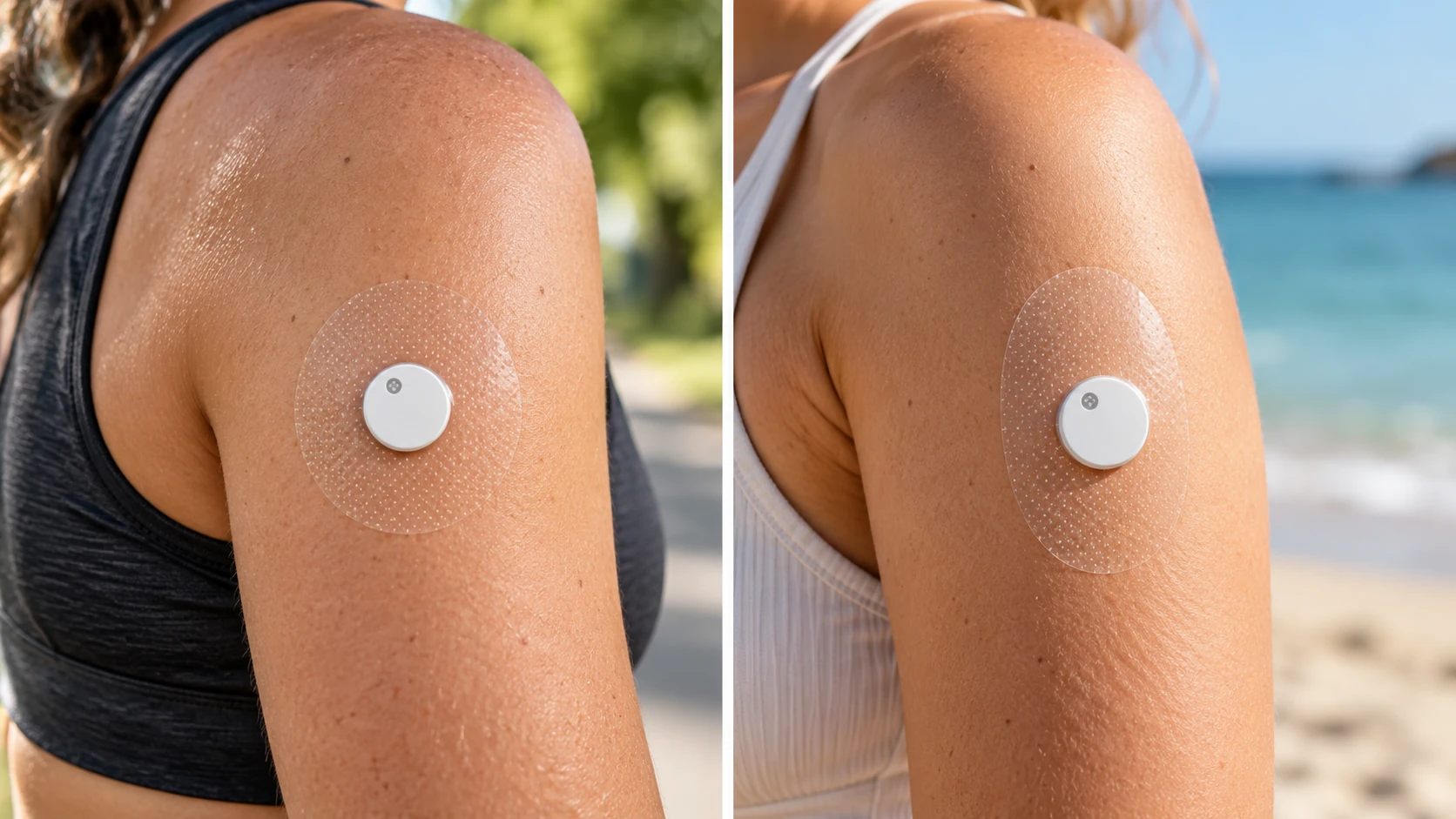
The ClearFit range includes our P2 and P3 transparent PU-film designs, with round and oval formats respectively. The wearing illustration below shows the intended transparent, fine-dotted appearance. It should not be read as a wear-duration test, a swimming guarantee or a compatibility claim for the pictured sensor.
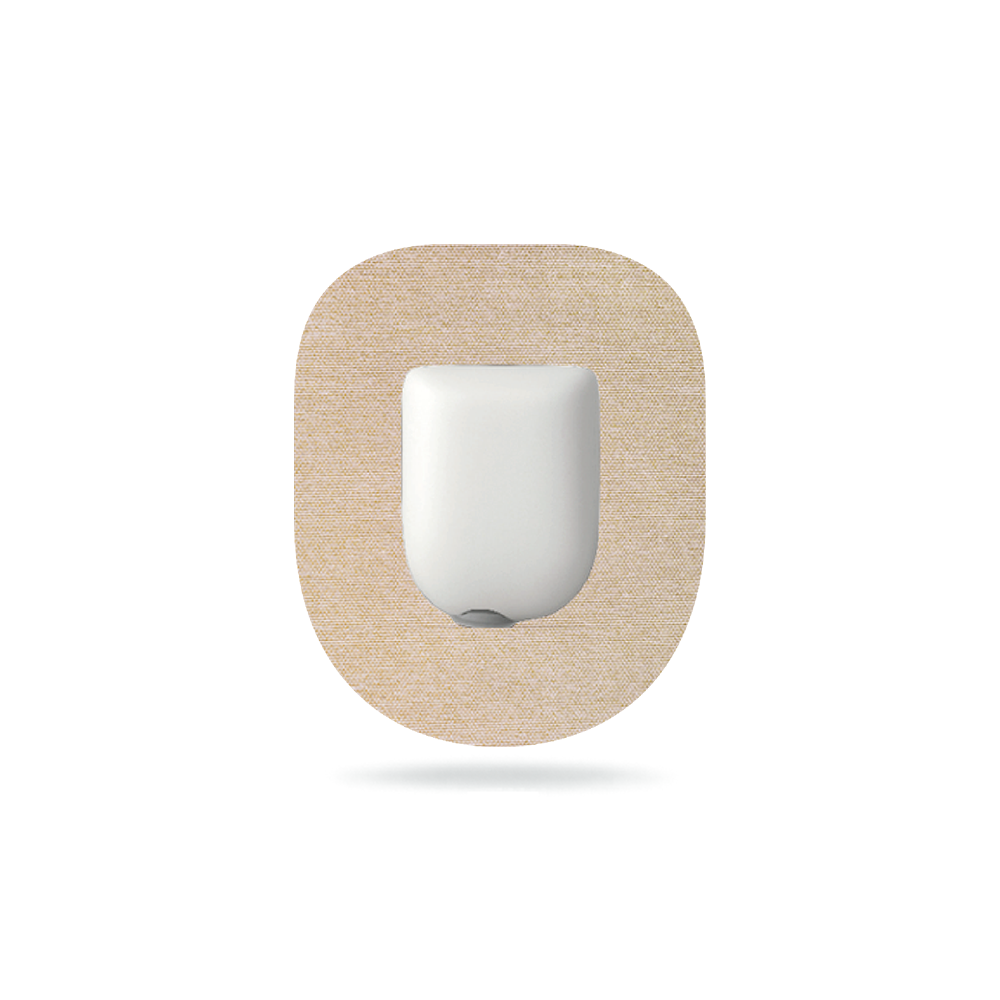
For the nylon pump-overpatch option shown above, see the ActiveFix range. For protective-film enquiries, see LINKFAR Skin Barrier Wipes. Adhesive-removal and underpatch requirements can be discussed with our team against the current specification and exact device model. The broader category list in this guide should not be read as confirmation that LINKFAR supplies every belt, case or therapy consumable mentioned.
Accessories should make device wear easier to manage. A well-chosen range gives customers clear options for distinct needs, without suggesting that everyone needs the same combination.
Discuss your accessory range with LINKFAR. Contact our team with the device model, the problem you want to address, intended wearing conditions and any material or packaging requirements. We can then review the relevant product options and the documentation needed for your evaluation.
Related articles
-
 Neonatal heel lancets: why choose a shallow incision?
For a newborn, the difficult part of heel sampling is not simply making blood appear. It is obtaining an acceptable specimen while limiting the…
-
 Insulin Pump Adhesive Allergy: My EASD 2026 Takeaways
By David Zhou, LINKFAR Healthcare GmbH At EASD 2026, several insulin pump distributors asked me about underpatches. LINKFAR already has underpatch options, including versions…
-
 CGM Skin Barrier Wipes: Balancing Protection and Hold
By David Zhou · LINKFAR Healthcare GmbH Recently, a customer in Central America told us that his CGM came off during a football match…
-
 Waterproof and breathable CGM overpatches: the P2/P3 design
A CGM patch can still be attached after a swim while the skin underneath feels damp. Those are two different results, and checking only…