
If you distribute medical consumables, you may already know which products your customers need. Building your own brand raises a different set of questions: who will supply the product, who approves your packaging, and how will the goods reach your warehouse in the EU?
Private label medical devices are supplied under a customer’s brand through an agreed manufacturing and supply arrangement. For an EU project, the brand on the box does not by itself determine who is the legal manufacturer or importer. Those roles need to be settled before packaging approval and the first production order.
For suitable projects, LINKFAR can coordinate product sourcing, customer-brand packaging, EU importation and delivery to an agreed destination. This guide explains what to prepare, what the arrangement can cover, and which responsibilities still need a clear owner.
What do you need to start a private-label project?
Start with a product brief, target EU countries, your brand and packaging requirements, expected quantities, and the role you want your company to take. Agree who is the legal manufacturer, who controls the UDI and label, and who handles importation before placing the first production order.
The term OEM is used for several business arrangements. You might want an existing product in your packaging, a different pack configuration, or a product sourced from a manufacturer you have already selected. Describe that requirement first. A change to device specifications needs a different assessment from a change to the box design.
| Prepare this information | What to include |
|---|---|
| Product and use | Product type, essential specifications, intended users and the use you want to support. Include an existing product reference if available. |
| Sales markets | The EU countries and sales channels you plan to supply. These inform the language and market requirements to check. |
| Brand and artwork | Your brand name, logo files, packaging concept and any customer article numbers already in use. |
| Packaging | Units per sales pack, pack format and the information your customers need to identify the product. |
| Quantities and timing | Initial order, expected repeat demand, sample requirements and desired delivery date. These are inputs for feasibility and quotation, not confirmed supply terms. |
| Your preferred role | Whether you want to buy branded products from an EU supplier or intend to act as the legal manufacturer yourself. |
| Delivery scope | Destination, receiving requirements, and which party will arrange transport, customs and the applicable importer activities. |
You do not need finished artwork to begin the discussion. A clear brief lets the supplier identify the product, documents and decisions needed to move forward. You can review LINKFAR’s product portfolio when preparing it.
Can your brand appear on a device made by another manufacturer?
Yes, but the arrangement must establish who carries the manufacturer responsibilities. Under Article 16(1)(a) of the EU Medical Device Regulation, an agreement can allow a distributor or importer to use its own name or brand while the manufacturer remains identified as such on the label and responsible for the manufacturer requirements. The European Commission’s UDI Helpdesk explains this exception and its consequences for UDI responsibility.
| Decision | Your brand, existing legal manufacturer retained | Your company becomes the legal manufacturer |
|---|---|---|
| Customer-facing brand | Your brand can be used under the agreed arrangement. | Your brand can be used. |
| Manufacturer identified on the label | The existing legal manufacturer. | Your company. |
| Manufacturer responsibility | Remains with the identified manufacturer. | Your company assumes the relevant manufacturer obligations. |
| UDI responsibility | Remains with the identified manufacturer. | Follows your company’s manufacturer role. |
Ask for this decision in writing. The brand owner, production factory and legal manufacturer may be different entities. A factory’s ability to print your logo does not settle the regulatory arrangement.
Who controls UDI and your private-label product codes?
The Unique Device Identification system supports device identification and traceability. For a private-label project, agree how the customer’s product version connects to the manufacturer and the relevant identifiers.
The July 2026 MDCG 2026-5 position paper clarifies that, where the original manufacturer remains the legal manufacturer, UDI-DI assignment must remain with that manufacturer. The identifiers must be linked to it in EUDAMED and the issuing entity’s records. A third party can perform agreed operations on the manufacturer’s behalf; this does not transfer the manufacturer’s legal responsibility.
A version sold under your brand may therefore have a different UDI-DI from the version sold under the manufacturer’s brand. This is different from a distributor independently assigning the device a UDI in its own name while retaining someone else as the legal manufacturer.
There are three terms to distinguish:
- Basic UDI-DI connects a device group to relevant regulatory records and documentation. It is separate from the device’s packaging label.
- UDI-DI identifies the manufacturer and device version within the UDI system.
- UDI-PI carries applicable production information, such as a lot number or expiry date.
The Commission’s factsheet for importers and distributors explains the device and production identifiers and the checks involved in supplying devices.
MDCG 2018-1 Rev.4 explains Basic UDI-DI and changes that require a new UDI-DI, including changes to the trade name or quantity in a package. A new UDI-DI does not automatically mean a new Basic UDI-DI.
Your purchase order and stock system may also use customer article numbers. Record the mapping between those numbers, the branded product, pack size and UDI-DI. If your team uses the term EAN for a commercial barcode, ask the manufacturer and issuing entity to confirm how that code relates to the UDI scheme before artwork approval.
Who owns the packaging, and who approves its contents?
Separate the commercial ownership of artwork from control of the regulated product information. Your agreement can specify ownership of the logo, design files, printing tools and unused packaging. It should also identify who prepares, checks and approves each part of the label and instructions for use.
We recommend keeping one approved artwork version for each product, language and pack configuration. Connect it to the agreed manufacturer identity and codes, and define how later changes will be reviewed.
If an importer or distributor independently translates or repackages devices, additional requirements can apply. MDCG 2021-26 distinguishes these activities from work subcontracted by the manufacturer and performed on its behalf and under its control. Resolve that distinction before deciding who will print, translate or alter packaging.
Do you have to become the EU importer?
For a device from a non-EU manufacturer, the supply chain must identify the EU entity that first places the individual device on the Union market. If you obtain devices after that first placing and supply them onward, your role is generally distributor. The MDCG guidance on importers and distributors explains the distinction.
A delivery address, freight arrangement or customs agent alone does not determine that role. A manufacturer established in the EU also creates a different regulatory supply chain from a non-EU manufacturer, even where production takes place outside the EU.
For a suitable LINKFAR importer project, the agreed model is that LINKFAR takes the EU importer role and supplies your branded products to the agreed destination. This can remove the need for your business to manage overseas import operations itself. Your remaining responsibilities depend on your actual role, including distributor obligations where you resell the devices.
What does EUDAMED registration establish?
EUDAMED is the European database for medical devices. The Commission confirmed mandatory use of the first four modules from 28 May 2026, including actor and UDI/device registration. Specific transitional provisions still need to be checked for existing devices. See the Commission’s EUDAMED announcement.
Registration is one part of the project. It does not replace product conformity assessment. Before supply, the applicable checks must cover the EU declaration of conformity, CE marking, any required notified-body certificate, labels, instructions and identifiers for the actual device being supplied.
What can medical device OEM change, and what needs further review?
Private-label supply can give you your own presentation of an existing product. The agreed scope may cover branding, packaging, languages and commercial pack formats. Product selection and the regulatory role arrangement determine what is feasible.
| You want to change or arrange | What to agree first |
|---|---|
| Brand, design or pack quantity | Manufacturer approval, required identifiers, document consistency and production feasibility. |
| Device specifications or intended use | Technical and regulatory assessment of the proposed change. |
| Claims in your catalogue or website | Evidence and consistency with the device’s supported purpose and performance. |
| Import and delivery | The actual importer, scope of work, costs and handover terms. |
An existing certificate is not a general permission to market any product under any claim. Ask how your chosen model and branded version are covered. Likewise, a door-delivery agreement should state which work the supplier takes on and which obligations remain with your business.
This guide focuses on devices under the MDR. IVDs, cosmetics and other product categories need their own assessment before the same commercial model is applied.
Compare the supply scope, not only the unit price
Before comparing quotations, ask where each supplier’s work ends. A product price at the factory and a price including branded packaging, agreed import activities and delivery to your EU warehouse cover different work.
Request the same product specification and pack configuration from each supplier. Then identify what the quote includes: samples, artwork preparation and approval, printing, transport, customs coordination, duties and taxes, and delivery. Record exclusions rather than assuming that a service described as “OEM” includes them.
Repeat orders deserve attention too. Ask how approved artwork and product codes will be retained, who must approve a change, and whom your team should contact about a quality issue. These questions help define a workable supply arrangement before the first order.
What can LINKFAR provide for your brand?
LINKFAR Healthcare GmbH provides private-label sourcing and supply for European healthcare brands and distributors. Product options can come from the LINKFAR portfolio, our manufacturing operations in China, manufacturing partners or other manufacturers. For suitable projects, LINKFAR can take the EU importer role and coordinate the agreed sourcing, branded packaging, import and delivery work.
The service scope is confirmed for the selected product and supply chain. It can include:
- Selecting a product and coordinating discussions with its manufacturer, including a manufacturer you already have in mind.
- Coordinating your brand artwork and packaging requirements with the responsible manufacturer’s approval process.
- Aligning customer article numbers, packaging configurations and manufacturer-controlled UDI information.
- Arranging the agreed overseas procurement, transport, customs coordination and delivery to your destination in the EU.
- Providing an EU business contact for supply coordination and communication with the manufacturer.
For products where LINKFAR is itself the legal manufacturer, the project follows that manufacturer arrangement. For products from another legal manufacturer, the responsibilities are defined for that supply chain. One company’s certificate or registration cannot simply be applied to another company’s products.
An example of how the arrangement works
Suppose an EU distributor wants an existing safety lancet under its own brand but does not want to manage direct imports. The project would first confirm the product and legal manufacturer, the customer’s label arrangement, packaging and codes, and whether LINKFAR will take the importer role.
If feasible and agreed, LINKFAR coordinates sourcing and delivery under that arrangement. The distributor receives its branded products from LINKFAR and continues with the obligations applicable to its own role. This is an illustrative project structure, not a claim about a completed customer case.
Start with a project brief
For configuration-level questions, our guides to dual-spring safety lancet design and insulin pen needle design show why a product category alone is not a complete purchasing specification.
Our recommendation is to settle the product and responsibility arrangement before approving production artwork. A practical sequence is:
- Share your product brief, countries, quantities and branding requirements.
- Confirm the product source, feasibility and each party’s regulatory role.
- Agree specifications, documents, packaging, identifiers and approval responsibilities.
- Confirm samples, commercial terms, import scope and delivery arrangements.
- Approve the agreed production and supply plan, with contacts for subsequent changes or quality feedback.
For door delivery, the quotation should specify the destination, freight, customs arrangements, duties and taxes, and the point of handover. This makes the scope assessable before you commit.
Send your product type, target EU countries, expected quantities and preferred delivery arrangement through our OEM project contact page. LINKFAR can review the project and explain the sourcing, branding and delivery scope it can offer. You can also review our OEM and contract manufacturing services.
Related guides
-
 Safety Lancet Manufacturer for Distributors and Retailers: Linkfar Product Guide
If you are a distributor, regional importer, or pharmacy procurement buyer sourcing disposable safety lancets for the Polish market, this page is written for…
-
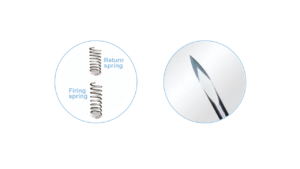 Dual-spring safety lancets: why PA and PA2 use two springs
The unit price of a safety lancet is easy to compare. The motion of the needle inside it is harder to see, yet that…
-
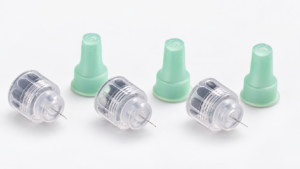 Insulin pen needle design: why the base matters too
Two insulin pen needles can have the same gauge and length on the box and still be quite different products. LINKFAR's wide, flat-base design…
-
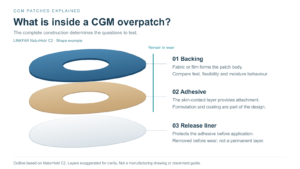 CGM patches explained: materials, adhesives and quality
Two CGM patches can have the same outline and feel quite different after a day of wear. One may feel more like fabric; another…