
Introduction: Why Sharps Safety Still Matters in Modern Healthcare
Sharps safety remains a daily reality in modern healthcare, not a problem that has been “solved” by progress or routine. Even in well-equipped clinical environments, needlestick and other sharps-related injuries continue to be a common occupational risk for the people who keep care moving: nurses on busy wards, lab technicians processing a steady flow of specimens, and phlebotomy staff performing repeated blood draws throughout the day.
What makes this issue persistent is that the impact is rarely limited to a single moment of injury. A sharps incident can create an immediate occupational exposure risk, trigger follow-up evaluations and monitoring, and leave lasting psychological stress for the person involved. It also raises a broader question for healthcare organizations: how much of safety can reasonably depend on flawless execution every time, under time pressure, fatigue, and constant interruptions?
Sharps safety is therefore not only about individual vigilance. It is a long-term, global, and systemic challenge that touches clinical practice, workflow design, and institutional responsibility. That is why it remains worth discussing seriously.
Sharps Injuries as a Global Clinical Risk
Sharps injuries are not confined to a particular region or a small set of facilities. They occur across healthcare systems because many of the underlying tasks are universal: frequent, time-sensitive, and embedded in everyday clinical routines. In fact, some of the most common scenarios are also the most “ordinary,” which is part of what makes the risk difficult to eliminate.
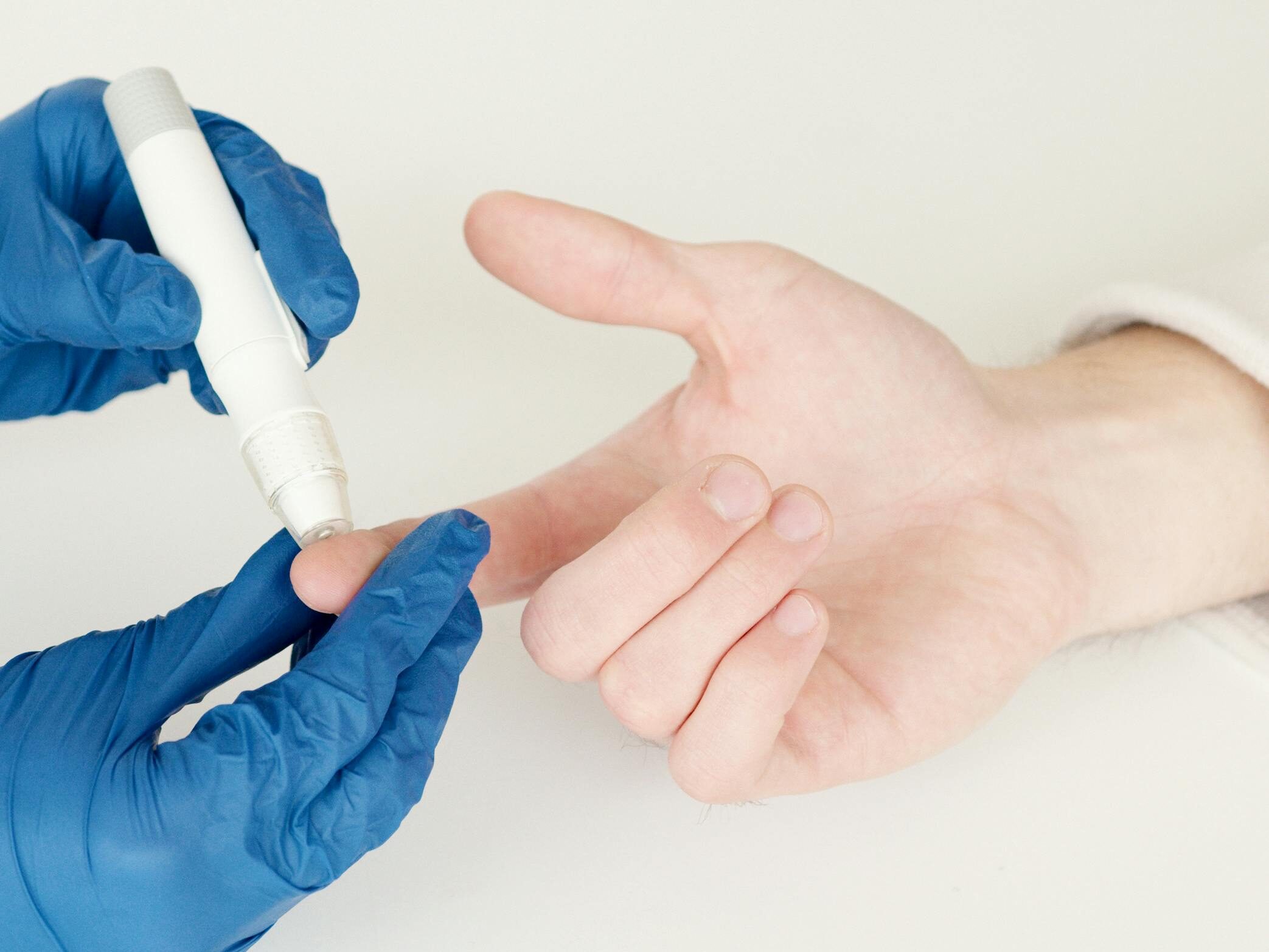
Consider capillary blood sampling, where rapid collection is often needed in high-turnover settings. The procedure may appear straightforward, yet it is performed repeatedly and often under less-than-ideal conditions, such as crowded workspaces or urgent patient needs. Point-of-care testing introduces similar pressures: staff may be moving quickly between patients, devices, and documentation, with limited time to reset and refocus between steps. Routine laboratory procedures add another layer, where sampling and handling occur at scale, and small deviations can accumulate across a high volume of repetitive actions.
A key insight is that sharps injury is not always the result of “carelessness.” Many incidents arise when workflow design and device exposure create vulnerability points, especially during transitions between steps. When the process itself repeatedly places hands near an exposed sharp, risk becomes a predictable outcome of the system, not merely a rare individual mistake.
Limitations of Conventional Lancets
Conventional lancets are widely familiar in clinical practice, and their basic function is simple. However, the risk profile of any sharp is shaped not only by use, but also by what happens immediately before and after the puncture step. Traditional designs often share two operational characteristics that can influence risk: manual needle exposure and a need for post-use handling.
In real clinical settings, the moments after use are often the most vulnerable. A lancet may need to be set down briefly, moved aside to manage another task, or handled again during cleanup and disposal. Even when disposal containers are available, the sequence from completion to disposal can include small interruptions: a conversation, a patient movement, a documentation step, or a change in gloves. These are not unusual exceptions. They are normal features of healthcare work.
This is where systemic risk becomes visible. When safety depends heavily on every single action being performed perfectly, every single time, the system is already operating close to its failure margin. The goal is not to criticize established tools, but to recognize where risk originates: in the combination of exposure and human workflow. Understanding these limitations creates a rational foundation for why safety-oriented design is necessary.
How Safety Lancets Improve Sharps Safety
Built-In Injury Prevention Mechanisms
Safety lancets are designed to reduce sharps risk through built-in protective mechanisms that work at the design level rather than relying on constant user vigilance. By structurally limiting how long the needle is exposed, these devices aim to reduce the window of vulnerability during and after activation. In practical terms, the key contribution is that the opportunity for accidental contact is lowered by default, even in fast-moving environments. This shifts prevention away from “remembering to do the right thing” and toward a workflow where the safer outcome is more consistently produced by the device’s operating logic.
Single-Use and Sterility Assurance
Single-use design supports sterility assurance, but its safety relevance goes beyond infection control. It also reduces the risk pathways associated with reuse, rehandling, or ambiguous device status during busy shifts. When each device is intended for one activation and then disposal, the workflow becomes clearer: fewer decisions about whether an item is “still usable,” less opportunity for unintended secondary handling, and fewer moments where a sharp might be retained on a tray or in a pocket. This aligns with clinical routines that value speed, clarity, and predictable disposal steps.
Human-Factor–Oriented Design
Clinical teams include people with different levels of experience, training backgrounds, and daily workload intensity. Human-factor–oriented design helps make safe outcomes less dependent on perfect technique under pressure. By reducing complexity at the point of use and minimizing exposed-sharp handling, safety becomes more systematic across skill levels and departments. This matters because real-world healthcare work includes fatigue, interruptions, and shifting priorities. Designs that account for human limits help reduce variability, supporting a more consistent baseline of sharps safety without assuming ideal conditions.
Sharps Safety from a Regulatory and Policy Perspective
Across modern healthcare, there is a clear institutional shift toward prevention-first thinking. Occupational safety is increasingly viewed as a core element of clinical quality, not an administrative afterthought. In that context, sharps safety is often approached as part of broader risk prevention programs, where the goal is to reduce avoidable exposure events and create more resilient processes for frontline staff.
Safety-engineered devices have become one visible direction within this shift. The emphasis is not on a single “perfect” tool, but on reducing predictable hazards through engineering controls that support safer workflows. This reflects a wider policy logic: when risk is well known and recurring, prevention should be embedded into systems rather than left to individual performance alone.
Example: High-Standard Approaches in European Healthcare
European healthcare is often referenced as an example of high standards in occupational safety and structured risk prevention. The point is not that one region holds the only answer, but that the broader trend is clear: healthcare systems increasingly recognize sharps safety as a strategic responsibility. This perspective also creates a natural transition into deeper discussion about how different regulatory environments express similar safety priorities, and why institutional expectations continue to rise.
Practical Considerations for Clinical Settings
Hospitals
Hospitals combine high staff diversity with complex, multi-department workflows. A single facility may include emergency care, inpatient wards, outpatient services, and specialty units, each with different rhythms and risk points. In such environments, standardization matters because it reduces variation between shifts, teams, and locations. When processes and tools support consistent handling and disposal routines, safety becomes less dependent on local habits or informal workarounds. This is particularly important during peak hours, staff rotation, or cross-coverage, where unfamiliarity can increase exposure risk. Practical sharps safety in hospitals is therefore closely tied to designing workflows that remain robust under changing conditions.
Clinical Laboratories
Clinical laboratories operate with high sampling frequency and repeated procedural cycles. Even when each individual step carries a small risk, repetition can create cumulative exposure: more handling moments, more opportunities for distraction, and more transitions between tasks. The concept of repetition risk is crucial here. Safety measures that reduce exposed-sharp handling can have outsized impact over time because they lower risk not just once, but across hundreds or thousands of routine actions. In laboratory settings, sharps safety is often less about rare dramatic incidents and more about managing accumulated risk embedded in daily throughput.
Beyond Compliance: Safety Lancets as Part of Risk Management
Compliance is an important baseline in healthcare, but it is rarely the endpoint of good safety practice. Sharps safety is most effectively addressed as a risk management topic: identifying where exposure can occur, reducing hazard points, and building routines that hold up under pressure. In that framework, safety lancets are best understood as one component within a larger system.
A systematic approach recognizes that real prevention comes from the interaction of multiple elements: training that builds correct habits, device design that reduces predictable hazards, and workflow structures that support safe sequencing and disposal. When these elements work together, prevention becomes more reliable than reaction. Instead of asking what to do after an injury, the focus shifts to reducing the likelihood that an injury can happen in the first place.
This mindset also changes the tone of the discussion. It is not a debate about “tools” in isolation. It is an analysis of how healthcare environments can be designed to protect people consistently, across shifts, departments, and varying experience levels.
Conclusion: A Systematic Approach to Sharps Safety in Modern Healthcare
Sharps safety should be treated as a systemic clinical risk, not a narrow operational detail. Needlestick and sharps-related injuries persist because they are intertwined with routine, high-frequency procedures and the realities of human work: time pressure, interruptions, and repeated handling steps. Addressing this challenge requires more than reminding individuals to be careful. It calls for prevention that is built into workflows and supported by design.
Safety lancets play an important role in this shift by reducing exposure opportunities through built-in protective mechanisms, supporting single-use clarity, and aligning with human-factor principles that make safe outcomes more consistent. They are not the entire solution, but they are a meaningful component of a broader risk management approach that includes training, process design, and institutional accountability.
Understanding how safety lancets fit into broader safety strategies is an important step before evaluating regulatory requirements or sourcing decisions.
Related articles
-
 Blood Sample Collection Methods: Venous, Capillary and Arterial Blood Collection Explained
Compare venous, capillary and arterial blood collection routes, specimen types, devices and handling considerations for reliable blood sampling.
Blood Sample Collection Methods: Venous, Capillary and Arterial Blood Collection Explained
Compare venous, capillary and arterial blood collection routes, specimen types, devices and handling considerations for reliable blood sampling.
-
 Skin Barrier Wipe for European Distributors and Importers
Skin Barrier Wipe can help European distributors evaluate a skin-friendly wipe for CGM accessories, dressings, and adhesive support applications. This guide helps small B2B…
Skin Barrier Wipe for European Distributors and Importers
Skin Barrier Wipe can help European distributors evaluate a skin-friendly wipe for CGM accessories, dressings, and adhesive support applications. This guide helps small B2B…
-
 Blood Sampling Lancet for European Distributors: LINKFAR NPA Safety Lancet
For distributors, dealers and importers in Europe, the LINKFAR NPA Blood Sampling Lancet offers multiple gauge and depth options for channel planning. This guide…
Blood Sampling Lancet for European Distributors: LINKFAR NPA Safety Lancet
For distributors, dealers and importers in Europe, the LINKFAR NPA Blood Sampling Lancet offers multiple gauge and depth options for channel planning. This guide…
-
 LINKFAR Safety Lancet TPA: Blood Sampling Lancet Guide for European Distributors
This Blood Sampling Lancet guide helps European distributors, dealers and importers compare LINKFAR Safety Lancet TPA specifications, packaging, use logic and inquiry details before…
LINKFAR Safety Lancet TPA: Blood Sampling Lancet Guide for European Distributors
This Blood Sampling Lancet guide helps European distributors, dealers and importers compare LINKFAR Safety Lancet TPA specifications, packaging, use logic and inquiry details before…